❋
Toronto Climate Week
Recap & Insights

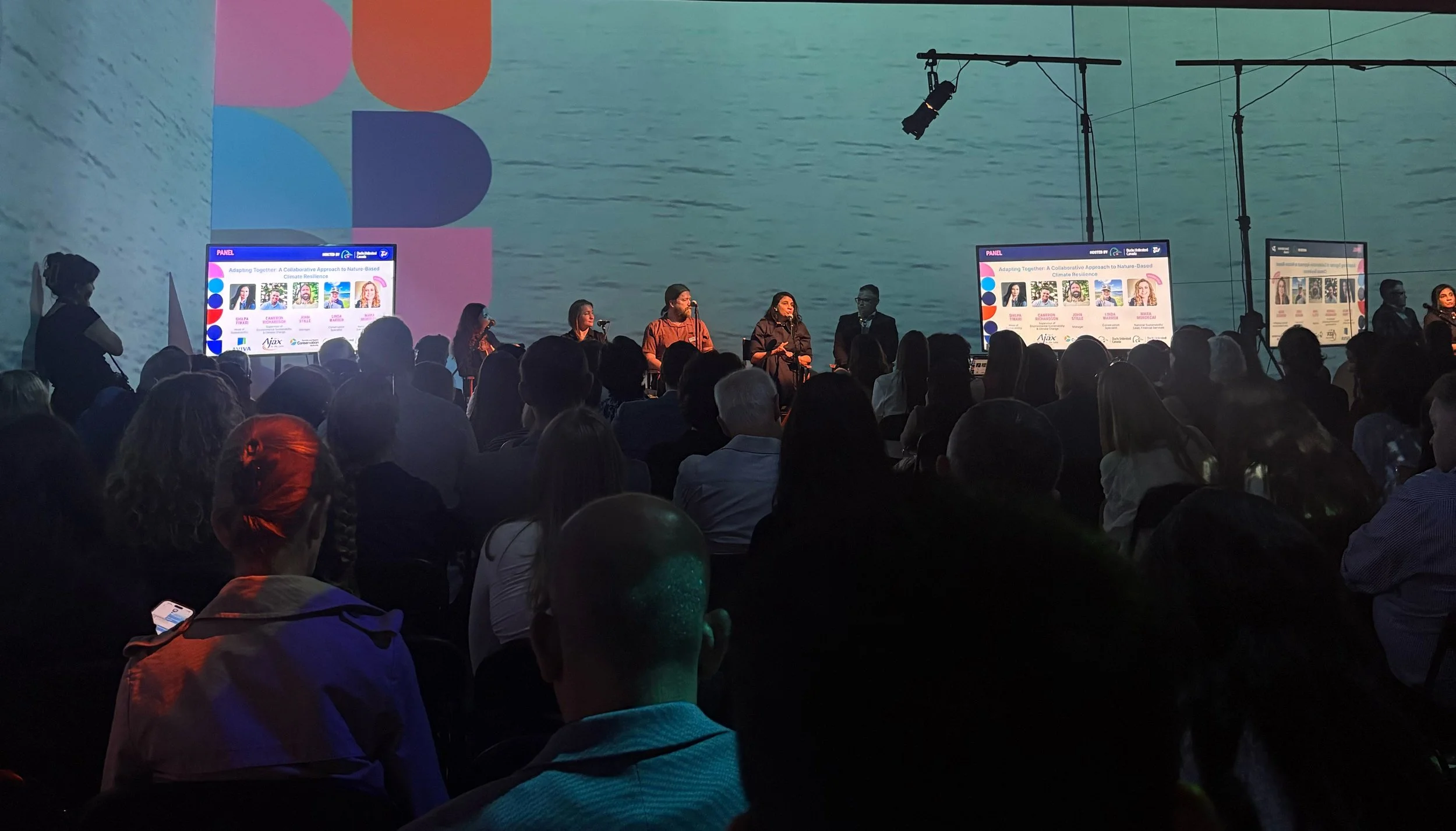
Thank you to everyone who joined my talk and co-creation lab during Toronto Climate Week. This page gathers the key insights and ideas that emerged from those conversations.
— Anne-Marie Brouillette, Founder Collective Matter
Why purpose must shape the work before branding can express itPurpose shapes the inside. Branding carries it into the world. Leadership protects the integrity between the two.
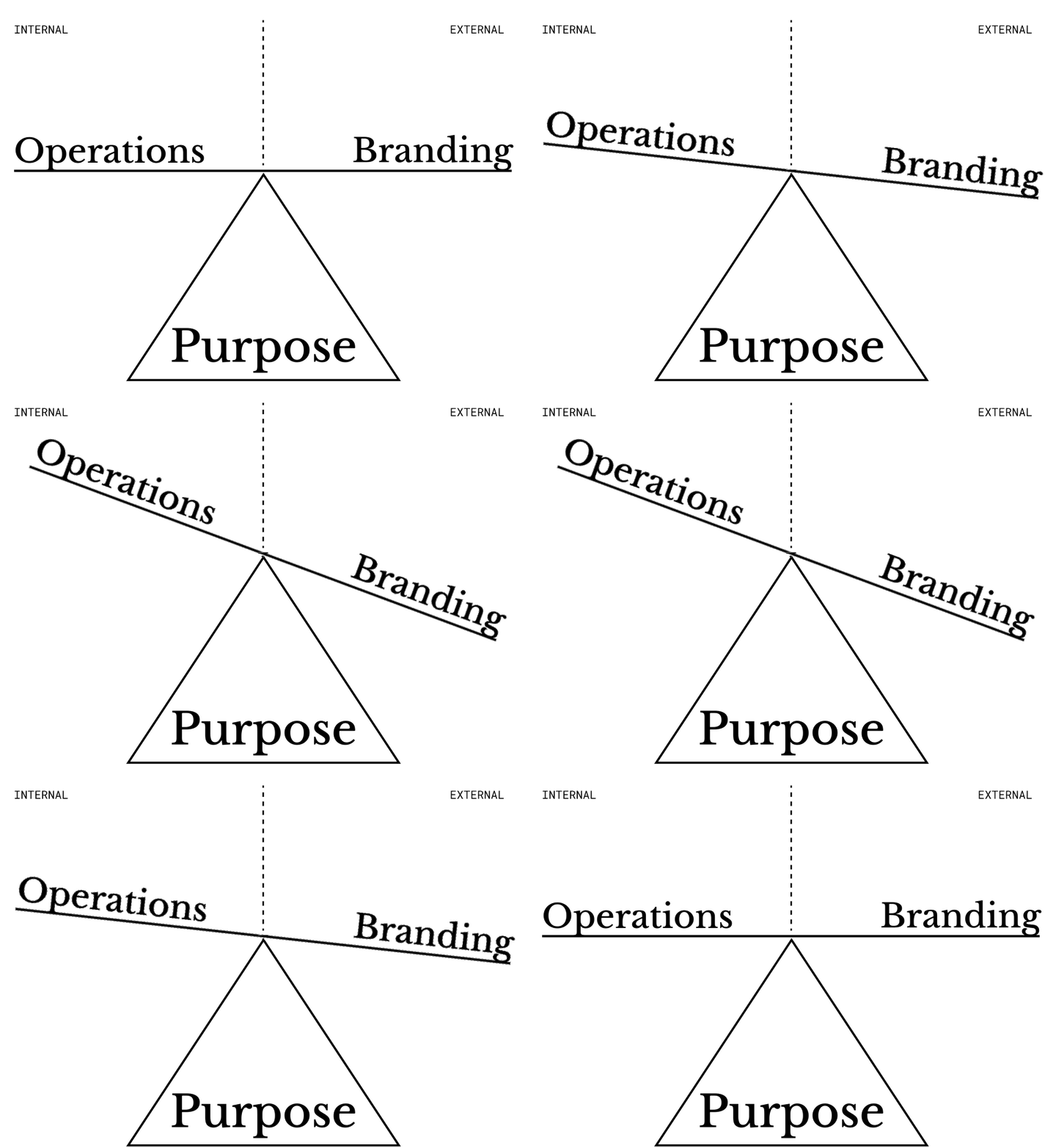
During my talk, I made the case that purpose has to change the inside before it can be fully expressed outside.
When ESG is isolated, when short-term pressure dominates, when marketing is briefed to sell rather than build, branding either floats free of purpose or is doing the heavy lifting. And when branding leans harder than operations, trust becomes fragile on the employee side as well as the audience side.
No amount of communication fixes what isn’t lived operationally. The result is branding and communications decorating instead of building trust. Every sustainability campaign or rebrand that missed started with a brief that was missing a voice, missing the data, or missing the creative translation.
Nobody is wrong. But everyone is working from a different truth.
Silence is not the answer. Here is the business case I’m proposing:
By design, business needs must identify and live a core purpose, build a brand strategy and conscious marketing plan on it, then communicate where you’re at and where you’re headed with radical transparency. It’s not about perfection. A good brand with a clear purpose will help you get where you need to go.
Purpose will give innovation a filter, collaboration a direction, and leadership a reason to make different decisions. That will give us the right material to build your brand based on trust and conscious marketing principles.
This was not an isolated observation. In the Nature and Water Flagship, panelists in Deciem’s “In Good Hands: A Conversation on Nature, Purpose, and Positive Impact” emphasized that for business success, brand purpose needs to be lived internally, embedded across teams, reflected in everyday decisions, and used to rally people around shared action rather than treated as a standalone sustainability message.
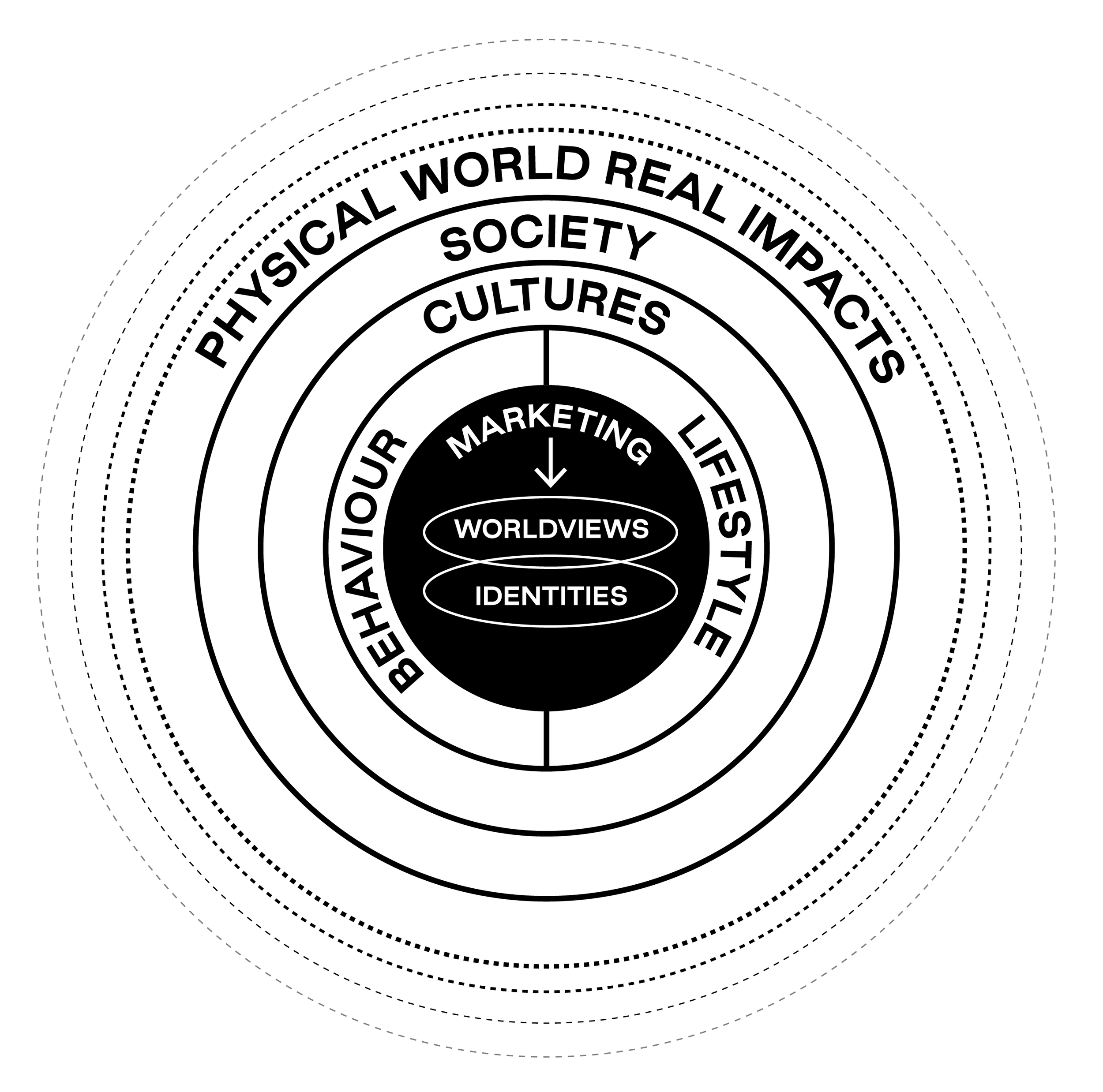
The Ripple Effect of Branding and Marketing on People and Planet
Adapted from University of Cambridge
Institute for Sustainability Leadership 2025
The shift: from consumers to citizens.
From persuasion to collective agency.
The second part of my talk explored a concept that first emerged in 2015 by Jon Alexander, a former advertising executive turned social entrepreneur and author.
What if we saw people as citizens instead of consumers, donors, users… and stopped asking “how do we persuade more people?” and started asking “how do we design something people actually want to be part of?”
For a brand: this means designing loyalty that comes from shared values, new positive behaviours and habit.
For a nonprofit or a cause: this means moving from persuasion and urgency, to invitation and collective ownership.
For a clean tech company: this means not selling a product, but enrolling people into a transition they believe in.
Branding should educate, normalize, and mobilize citizens.
Bad branding defaults to pressure, fear, guilt, selective truth. It cries for attention, but triggers avoidance, cynicism, disengagement. And it participates in the mode of hyper-consumption we are trying to exit.
The better alternative is communication that empowers citizens, supports sustainable behaviour, and promotes authenticity. Fostering positive societal impacts.
TRIGGER QUESTIONS❋ StructurAL COLLABORATIONIs sustainability a filter on decisions or a team in a lane?
❋ internal Lived truthIs your branding still doing the heavy lifting because the business is not yet living its purpose internally?
❋ INTERNAL COLLABORATIONIs your ESG team in the room when the branding/communication brief is written?
❋ citizen-shiftAre you mobilizing citizens or just selling to consumers?
❋ A Supportive Space for innovationDo you have the right voices around the table and do you practice safe leadership communication?
❋ AdoptionAre you reducing the friction that stands between intention and adoption?
To know more, say hello.
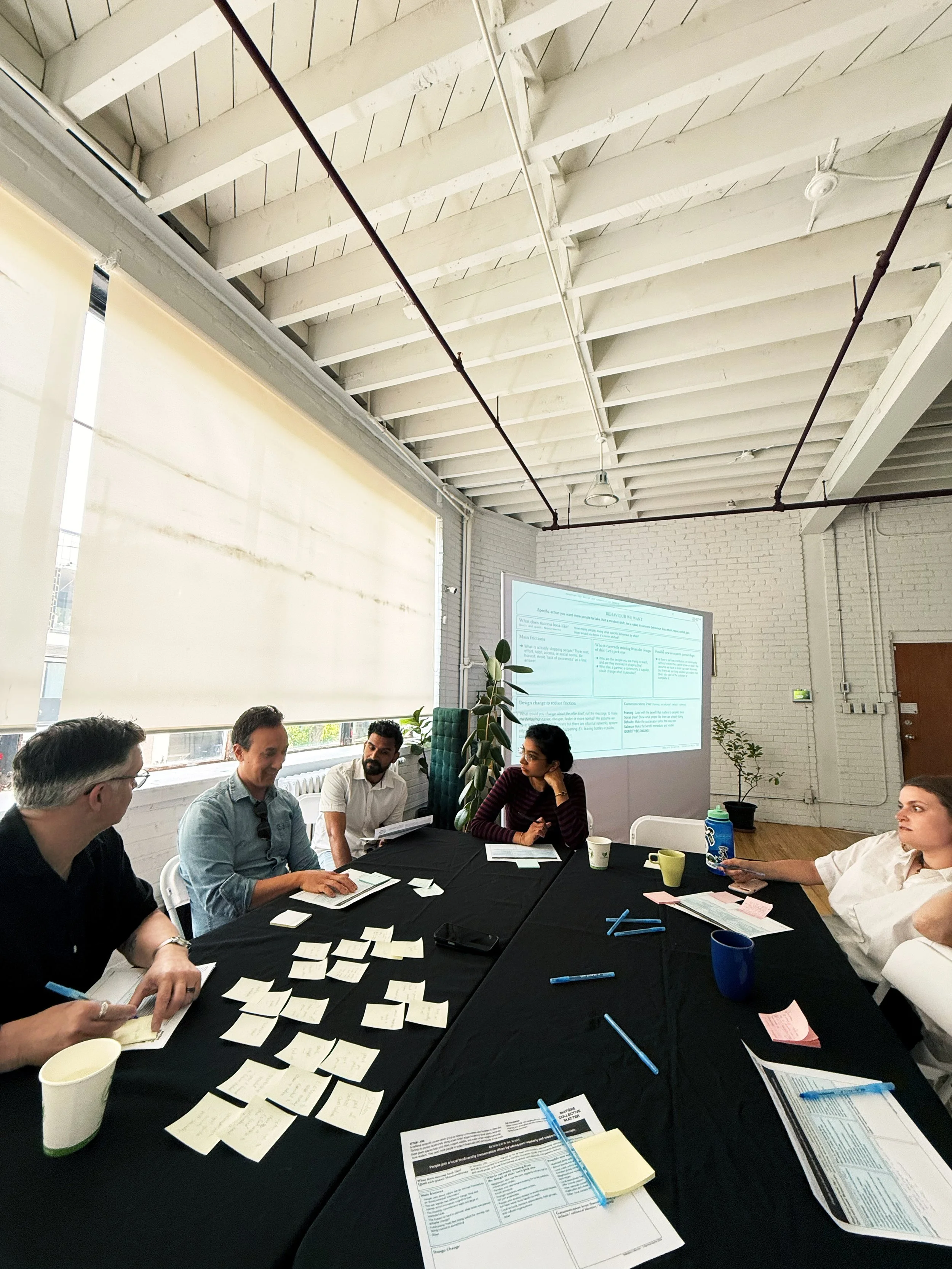
Co-creation LabThe citizen-shift and Designing Sustainability Adoption
The workshop was a one-hour version of our new co-creation lab built around the question: How do you move people from passive consumers to active citizens? This lab was designed to help teams co-create together and get out of their “yes, but” reality and be present as citizen first.
Each table was given a matrix with a different brief containing a target behaviour to gain adoption on, accompanied by main frictions, missing audiences, and possible new ecosystem partnerships already identified. A table explored a circular economy take-back program, another finding new funding streams and participation for a non-profit and the last the switch for heat pumps in households of Toronto.
They were tasked with completing the last two sections:
1. The design change to reduce friction
2. The communication lever,
The goal was to redesign, from small to big design changes, in the offer itself so that adoption becomes easier, faster, and more natural.
Key insights
All three cases shared the same structural challenge: the sustainable behaviour asks more of people than the default, in a world where sustainability fatigue is high. Here are our top insight from the session:
The main frictions is not just lack of awareness: it is effort, trust, unfamiliarity, or cognitive overload at the point of decision. Citizen education being the foundation that turns effort into meaning, unfamiliarity into confidence, and trust into habit.
New ecosystem partnerships: from municipal programs, community organizations, housing co-ops, trusted established local actors, because looking outward into a connected ecosystem can drive collaboration to help the citizen-shift toward sustainable actions.
Create the occasions for citizens to see themselves in the solution, feel closer to their community, learn something in the way and get closer to a sens of self by feeling empowered.
The missing audience is the person who is open but not actively looking: the park-goer who never thought to volunteer, the family with a box full of e-waste, the homeowner nearing replacement time who just wants a simple decision or solution.
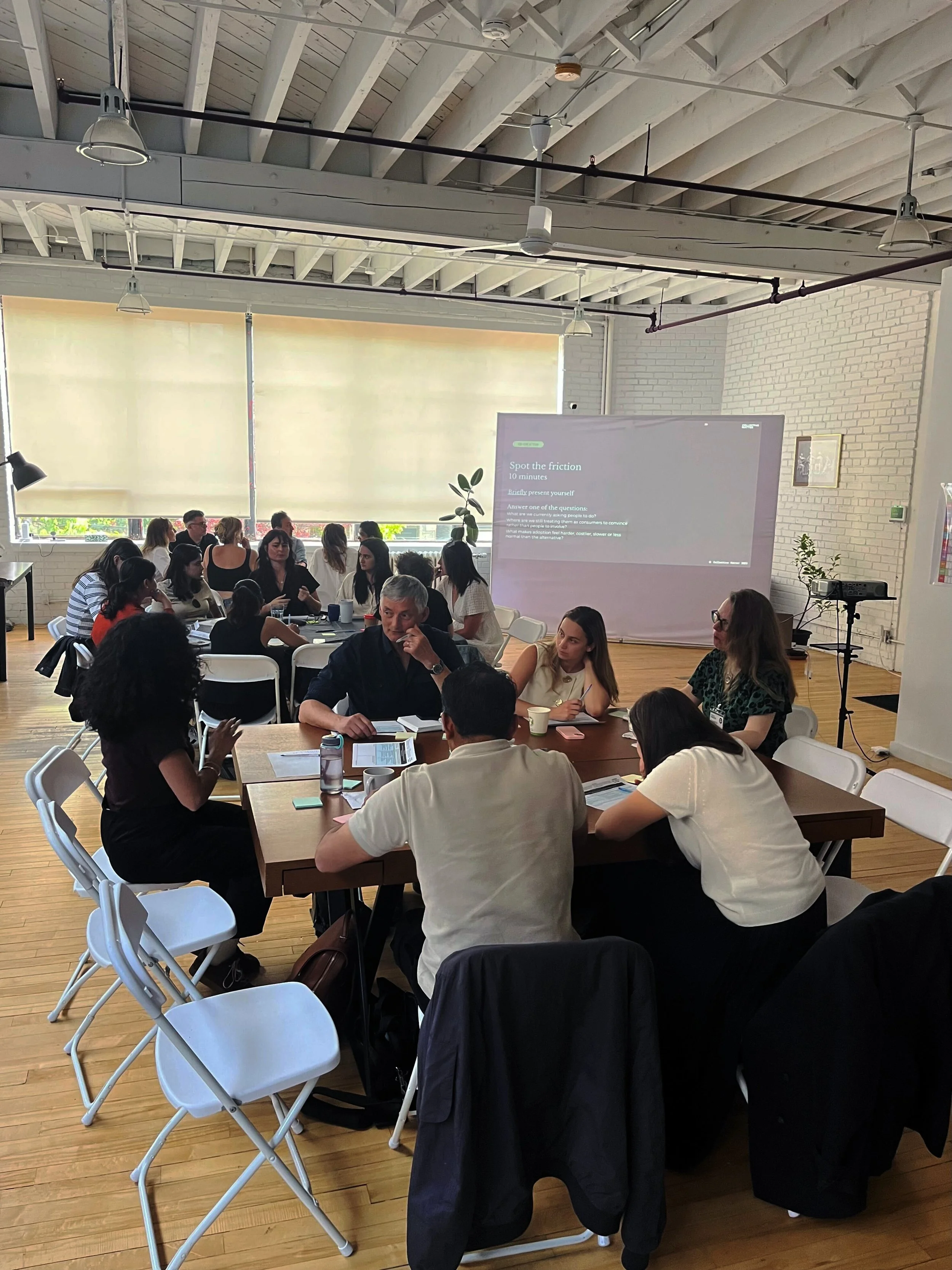
In the complete version of our workshop, teams co-create ideas and identify promising directions to explore further, including new initiatives, changes to the offer or product, partnership opportunities, and business model shifts.
Bring this workshop to your team, say hello.
About USWhat Makes Us Different
We’re a bilingual strategic support and creative arm for purpose-led organizations and businesses wanting to find their purpose and join the shift toward a net positive economy.
At Collective Matter, we operate with social economy principles, putting people at the center, not profit. We’re built on economic fairness, collaboration with senior consultants, and a circular relationship where small service providers work together to deliver high-value services that maximize your investment.
Building Brands, Capabilities & Movements That Matter
We don’t just advise, we do the work alongside you:
Complete existing teams: We build internal capabilities, brainstorm together, and fill gaps when you need extra support, or
Take full projects: We own everything from strategy to execution when you want a dedicated partner.

Brand strategy & positioning
Purpose discovery
Campaign strategy
Editorial Strategy
Brand Consulting
StrategyBrand creation & visual identity
Campaign
Messaging and storytelling
Creative mentoring
Community project concepting
CreativeConscious Branding 101
Citizen adoption
Mindset Shift Facilitation
Co-creation labs
Conscious marketing framework
facilitation